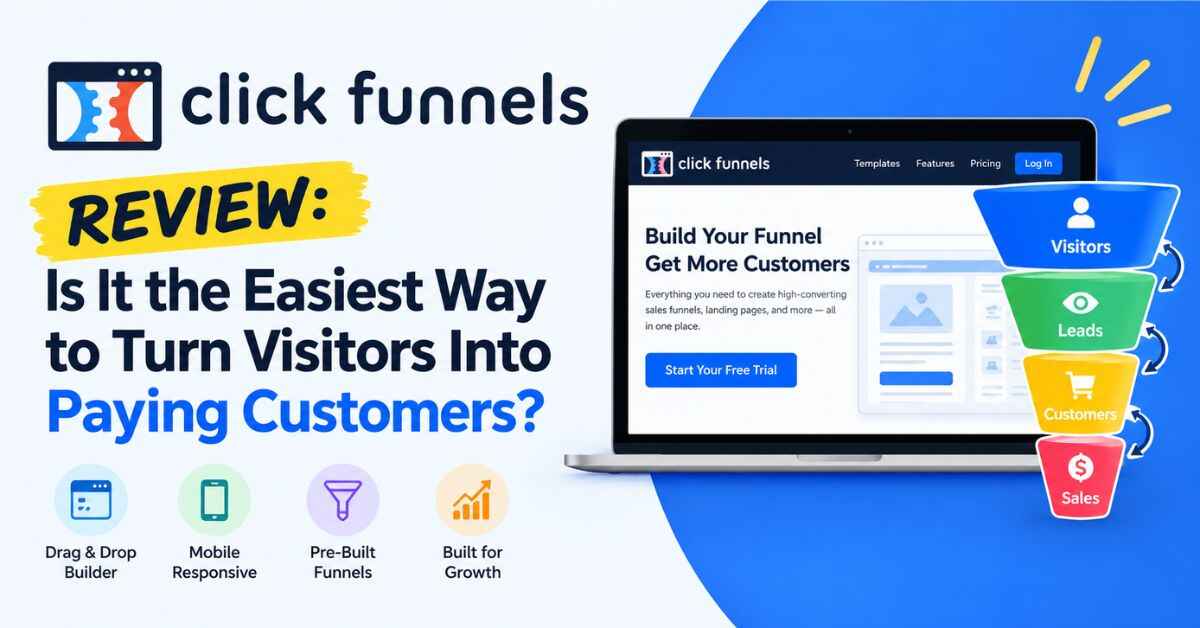
ClickFunnels Review: Is It the Easiest Way to Turn Visitors Into Paying Customers?
If you’re reading a ClickFunnels review, there’s a good chance you’re stuck on the same thing a lot of people get stuck on. You have something to sell, and you’re not sure how to get it in front of people without a mess of tools and a headache.
Maybe you’ve seen ClickFunnels mentioned in a podcast, a YouTube video, or a Facebook group. Maybe someone swore it changed their business. Maybe someone else said it’s overhyped. So you’re sitting there wondering who to believe.
Fair enough. I’ll tell you what it is, what I like about it, what I don’t, and who it makes sense for. If it’s not right for you, I’ll say that too.
Your Website Looks Great. So Why Isn’t It Selling?
Here’s a story you might recognize.
You finally launch your website. It took weeks. The colors are right, the logo looks sharp, and your “About” page has a decent photo of you. You send the link to your family and a few friends, and they say nice things.
Then it gets quiet.
A few strangers show up. Most leave after ten seconds. A couple join your email list. Once in a while somebody buys, and you feel like you won the lottery.
It’s frustrating, because you did everything “right.” You built the site, wrote the pages, and paid for hosting.
The problem usually isn’t the design. It’s the layout. A regular website works like a shopping mall, with a dozen doors and hallways, and every one of them is a chance for your visitor to wander off. They click your blog, then your contact page, then your pricing. Then their phone buzzes and they’re gone.
A website helps people look around. A funnel helps them decide. Those are two different jobs, and most websites only do the first one.
And Fixing It Gets Messy Fast
So you decide to do it properly. You read a few articles and learn you need a “system.”
Then the list starts growing.
You need a page builder for landing pages. An email tool to follow up with people. A payment processor and a checkout page. Something to host your course or deliver your download. A way to offer add-ons at checkout. Maybe a booking calendar. And a tool like Zapier to hold all of it together.
Every one of those has its own login, its own monthly bill, and its own way of breaking on a Friday night.
I’ve watched people spend three weeks connecting tools and zero days actually selling. An email doesn’t send. A payment doesn’t trigger the right page. A form stops syncing and nobody notices for days. You end up in help forums at midnight asking yourself why you started this in the first place.
The bills sneak up on you, too. Twenty dollars here, forty there. Add it all up and your “simple setup” costs more than you expected, and it still doesn’t feel simple.
That’s the problem ClickFunnels was built to fix.
What Is ClickFunnels, in Plain English?
ClickFunnels is a platform that lets you build the whole path a customer takes, from the first click to the final purchase, inside one account.
That path is the “funnel.” Think of a good restaurant:
You walk in. You get a menu with a few clear choices. You order. The server asks if you’d like dessert. You pay, and a few days later you get a thank-you note with a coupon.
Nothing in that experience is random. Each step leads naturally to the next one. A funnel does the same thing for an online business. Instead of dropping someone onto a busy website and hoping they find their way, you guide them one step at a time toward one action.
With ClickFunnels you get the pages, the checkout, the email tools, and the automation, and you don’t need a developer. It’s also been around since 2014, so it isn’t some new app that might vanish next spring. It’s been updated a lot over the years, and today it covers much more than the old “just a page builder” days.
How It Actually Works (A Simple Example)
Let’s say you’re a fitness coach with a 6-week home workout program. Here’s what a basic funnel could look like.
First, you build a landing page offering a free 5-day quick-start guide. Visitors give you their email to get it. There’s no menu and no sidebar, just one clear thing to do.
Next, they land on a thank-you page with a short video and a special price on the full program, available for a limited time.
If they say yes, they go to a clean checkout page. Right there you can offer an optional add-on, like a printable meal planner for a few extra dollars.
After they pay, they get instant access to the program. Over the next few days, automatic emails send tips, a reminder about the bonus, and a friendly check-in.
In the old way of doing things, that could be five different tools. Here, it’s one dashboard. That’s the real appeal. Nothing fancy or secret, just fewer moving parts.
What I Like Most About ClickFunnels
I’ll skip the giant feature list you can find on any sales page. These are the things that make a difference day to day.
You don’t have to be a “tech person”
This matters more than anything else for most people.
The builder is drag and drop. You pick a template, click a headline, type your own words, swap the picture, and change the button text. If you’ve ever put together a slideshow, you’ll feel okay here.
It still takes a little getting used to, like any new tool. But a basic funnel can be live in a day or two instead of a month. And when you get stuck, there’s training and a big community around the platform, which helps a lot when you’re new.
Templates save you from the blank page
The blank page is where plenty of projects die. You sit there with a cursor blinking at you and nothing happens.
ClickFunnels has ready-made templates for the usual goals: collecting leads, selling a product, running a webinar, booking calls, hosting a challenge. These layouts are based on setups lots of marketers have already used, so you’re not guessing where the button goes or how checkout should flow.
A few templates look a little dated, I’ll admit that. But they’re easy to restyle, and a simple, clear page almost always beats a flashy one that confuses people.
Everything sits in one place
This is where ClickFunnels earns its keep for a lot of people.
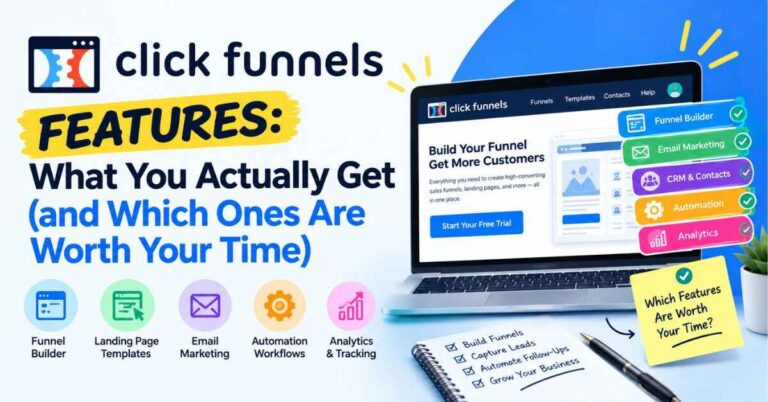
You get funnels, pages, checkout, email marketing, a contact list, and automations inside one account. You can sell courses and digital products there too. When everything lives together, there’s less to break. You spend less time fixing connections and more time improving your offer, which is the part that actually brings in money.
It’s built for selling
Many website builders care mostly about looks. ClickFunnels cares about what the visitor does next.
Each page is meant to get one action: sign up, book, or buy. Features like order bumps and one-click upsells help raise how much each customer is worth. Small things add up. Someone who came for a $27 product might happily add a $17 extra if it’s offered at the right moment. On a plain website, that kind of offer doesn’t happen unless you build it yourself.
Follow-up is built in
Most people don’t buy the first time they see something. They need a reminder, a little more trust, or just a second look.
With built-in email and automation, you can set up a sequence once and let it run. Someone joins on Monday and gets a welcome email right away. Wednesday brings a helpful tip. Friday brings a gentle nudge. You write it once and it keeps working while you do something else.
That’s the part that makes a business feel less like a daily scramble.
No page limits to worry about
Right now the plans include unlimited funnels, pages, and visitors. That means you can test ideas, build funnels for different offers, and not panic if one post suddenly goes viral and brings in a crowd.
Who Gets the Most Out of ClickFunnels?
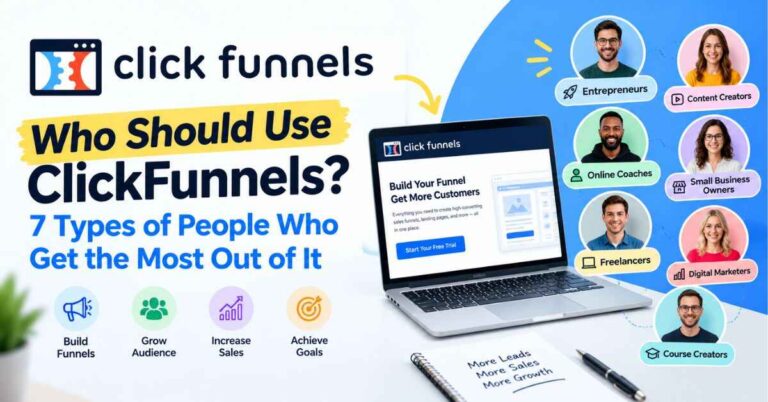
It’s not just for one kind of person. These are the groups I see getting the most from it.
Coaches and consultants. You sell your time or know-how, so you need a clear way to get people to book a call. An application funnel can screen out the casual browsers and bring you better leads.
Course creators. You know something worth teaching. You need a place to sell it, deliver it, and follow up with students. ClickFunnels handles the selling side very well.
Local businesses. Gyms, salons, home services, clinics. A funnel offering a free consultation or a first-visit discount can turn someone searching nearby into a real appointment.
Product sellers. If you sell physical products, a funnel lets you promote one item with a focused page instead of asking shoppers to dig through a whole store.
Freelancers and agencies. If you build marketing assets for clients, you can launch working systems fast. The higher plans also give you more workspaces to keep client projects separate.
Affiliate marketers. A lot of marketers use funnels to collect emails before sending people to an offer. It’s much better to own a list than to rely on one-time clicks.
Total beginners. If you’ve never sold online, a funnel gives you structure. You don’t have to wonder what comes next, because the path is already laid out.
A Few Real-World Setups
Sometimes it’s easier to picture the thing than to read about it. Here are some common examples.
The webinar funnel. A financial coach runs a free 45-minute training. People register on one page, get reminder emails, watch the session, and see an offer at the end. It’s a classic, and ClickFunnels has templates made for it.
The free-plus-shipping offer. A small brand gives away a sample and charges only for shipping. At checkout, they offer a bigger bundle. Customers try before they commit, and the brand grows its list at the same time.
The application funnel. A business consultant doesn’t want every inquiry. Interested people fill out a short form, and only the right fit gets a link to book a call. It saves time and keeps the calendar full of people worth talking to.
The lead magnet. A blogger offers a free checklist in exchange for an email, then sends a short series of emails recommending a paid resource. It’s small, but it works around the clock.
The course launch. A creator sets up a sales page, a checkout, and automatic access after payment, plus a few emails to keep students engaged.
None of these are complicated. The best funnels usually aren’t. They’re simple and clear.
What Does ClickFunnels Cost?
This is where plenty of reviews either dodge the question or oversell. So let’s just say it.
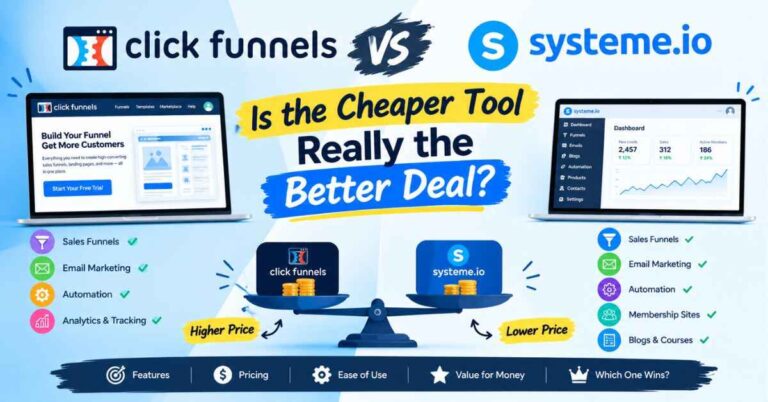
ClickFunnels isn’t cheap. The main plans are Launch at $97 a month, Scale at $197, and Optimize at $297. There’s also an annual-only Dominate plan for bigger operations. Paying yearly lowers the monthly price, and email sending has a small extra charge. Prices change from time to time, so check the pricing page before you decide.
Is that a lot? Next to a free website builder, yes. But think about what you’d pay for a page builder, an email platform, a checkout tool, a course host, and automation software separately. Often the total is similar or higher, and none of it talks to the others without effort.
Here’s a simple way to think about it. Ask yourself, “What is one new customer worth to me?”
If you sell a $500 coaching package and the funnel brings in one extra client a month, it pays for itself many times over. If you sell a $20 ebook, you’ll need more volume, though the funnel can also build your list and sell add-ons.
So the honest answer is this. ClickFunnels makes the most sense when you already have an offer and you’re ready to put it in front of people. If you’re still figuring out what to sell, sort that out first.
There’s also a 14-day trial. You can log in, look around, and build something before paying. Honestly, that’s the best way to decide. Within a few days you’ll know whether the builder feels natural to you.
The Downsides (Nothing’s Perfect)
I’d rather be upfront than pretend this tool has no flaws.
It can feel like a lot at first. ClickFunnels does plenty, so the dashboard looks busy when you first log in. Give yourself a couple of days and follow the training. Most people catch on quickly.
It’s not the cheapest option. If all you need is one landing page, a simpler tool will cost you less. ClickFunnels pays off when you use more than one part of it.
Some templates feel a bit old. It’s an easy fix since you can restyle them, but don’t expect every template to look perfect right out of the box.
And it won’t create your offer for you. This is the big one. ClickFunnels is a vehicle, not a driver. If your offer is unclear or nobody wants it, the best funnel in the world won’t save it.
I think this is why some people say it “didn’t work” for them. They expected the software to do the thinking. It won’t. But it makes the doing a lot easier.
ClickFunnels vs. the Old Way of Doing It
Let me put the difference side by side.
The old way goes something like this. Build a website. Add a plugin for popups. Sign up for an email service. Connect a payment processor. Add another plugin for upsells. Set up a course platform. Test every connection. Fix whatever broke last Tuesday.
The ClickFunnels way goes like this. Pick a funnel type. Edit the pages. Connect your payment method. Write your emails. Publish.
The first way can absolutely work, especially if you’re technical or you enjoy tinkering. But most business owners I talk to don’t want to become part-time IT staff. They want to share what they offer and get paid for it.
That’s really what you’re buying with ClickFunnels. More than features, it’s time and less stress.
Tips for Your First Week
If you do try it, here’s how I’d spend those first few days so you don’t waste them.
Start with one funnel. Don’t build five. Pick your best offer and build a simple path around it.
Keep pages short. One headline, one clear benefit, one button. Resist adding extra links.
Use a template and make it yours. Change the words until it sounds like you talking to a real person.
Write emails like you’d write to a friend. Short and honest beats polished and stiff.
Check your numbers after a week. If lots of people visit but few sign up, the headline or offer probably needs work. If they sign up but don’t buy, look at your follow-up emails.
Change one thing at a time. Small, steady tweaks turn an okay funnel into a good one.
👉 If this has felt too complicated to start, try this: open a template and see how it feels. It takes about ten minutes to know whether it suits you. You can start here:
My Honest ClickFunnels Review: Is It Worth It?
So where do I land?
I think ClickFunnels is worth it if you have a product, service, or offer ready to sell. It’s worth it if you’d like your pages, checkout, email, and follow-up all in one place, and if you’d rather spend your time on your business than on tech problems. It also suits you if you like the idea of a clear, guided path for your customers.
It’s probably not the right pick if you only need a basic informational website, if you’re not ready to sell anything yet, or if your budget is very tight and one page is all you need.
For the right person, it quietly makes everything simpler. You stop wondering how the pieces connect. You start focusing on what actually grows a business: a good offer, a clear message, and steady follow-up.
That’s why it’s lasted this long, and why so many people who try it stick with it.
Final Thoughts
Running an online business is hard enough. You don’t need to make it harder by juggling a pile of tools and hoping they all behave.
If you’ve read this far, you probably already sense that a funnel could help you. The next step isn’t more research. It’s opening the builder, picking a template, and seeing what happens. With a free trial available, there’s very little in your way.
Build something small. Publish it. Watch what people do. You’ll learn more in one weekend of doing than in a month of reading reviews, even a helpful one like this, I hope.
👉 Ready to see if ClickFunnels fits the way you work? Take a look around and start your free trial here:
A quick note before you go: some links in this post are affiliate links. If you sign up through one, I may earn a small commission at no extra cost to you. I only recommend things I think are genuinely useful, and the opinions here are my own. Thanks for reading, and for supporting the site.