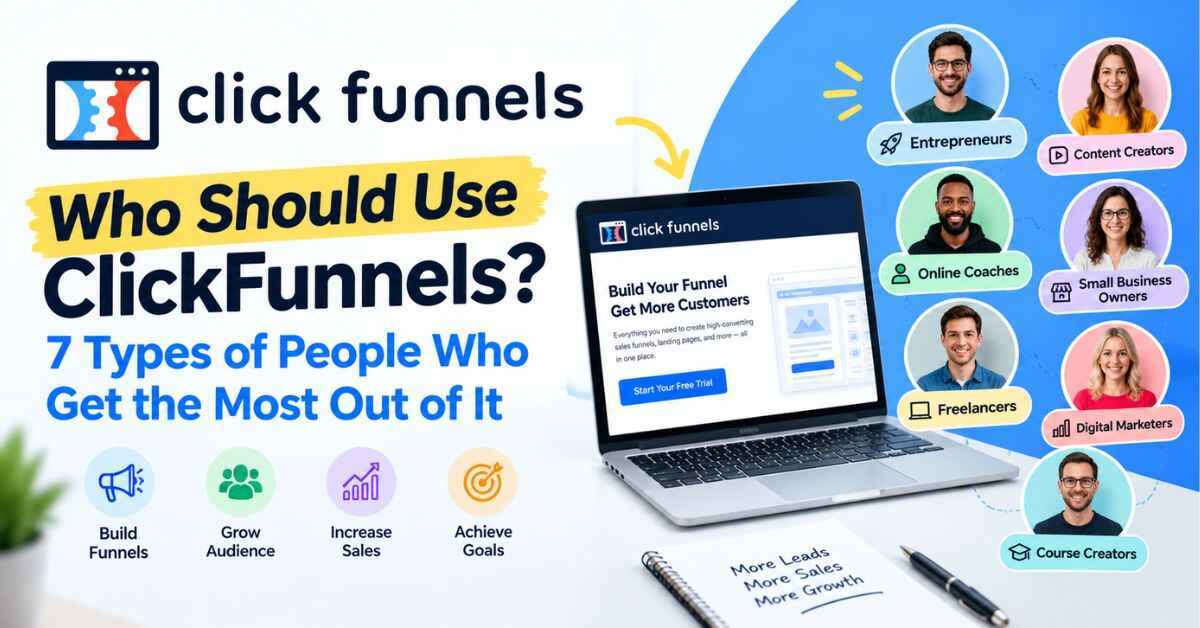
Who Should Use ClickFunnels? 7 Types of People Who Get the Most Out of It
If you’re trying to figure out who should use ClickFunnels, you’re asking the right question, and honestly, it’s a better one than “is ClickFunnels good?” Plenty of tools are good. What matters is whether this one fits the way you work, what you sell, and where your business is right now.
I’ve seen people sign up for ClickFunnels and love it. I’ve also seen people sign up, poke around for a week, and quietly cancel because it wasn’t what they needed. The difference almost always comes down to fit, not quality.
So let’s sort this out properly. I’ll walk you through who gets the most from it, who probably doesn’t need it, and how to tell which group you’re in. By the end, you should have a pretty clear answer.
The Mistake That Costs People Months
Let me tell you about a pattern I see all the time.
Someone has a business idea. Maybe it’s a coaching program, a course, a local service, or a product they’re excited about. They get fired up and start shopping for tools. They read reviews, watch videos, and ask in groups. Everyone recommends something different.
So they pick one. Usually the one with the loudest fans or the best discount.
A few weeks later, they’re stuck. The tool does a hundred things they don’t need and doesn’t quite do the one thing they do need. Or it’s too simple, and they’re duct-taping five other tools onto it. Or it’s too complicated, and they’ve spent more time watching tutorials than talking to customers.
Then comes the quiet frustration. “Maybe I’m just not good at this.”
You’re not bad at it. You picked a tool that didn’t match your situation. That’s a very fixable problem, and it starts with knowing what you actually need.
Why the Wrong Tool Hurts More Than You Think
It isn’t just the monthly fee. That part is easy to see.
The bigger cost is time and momentum. Every week you spend wrestling with the wrong setup is a week your offer isn’t getting in front of anyone. And when you’re building something on your own, momentum is everything. It’s the difference between “I launched” and “I’m still planning.”
There’s also the stress of a messy setup. A website here, an email tool there, a payment page somewhere else, and a pile of connections holding it all together. One thing breaks and suddenly you’re not sure which piece is the culprit. Meanwhile, a potential customer clicked “buy” and nothing happened.
I’ve talked to people who lost sales for days before noticing a broken link between two tools. That’s the kind of thing that keeps small business owners up at night.
So choosing well matters. And that’s why the question of who should use ClickFunnels is worth taking seriously.
So, What Is ClickFunnels?
Here’s the short version.
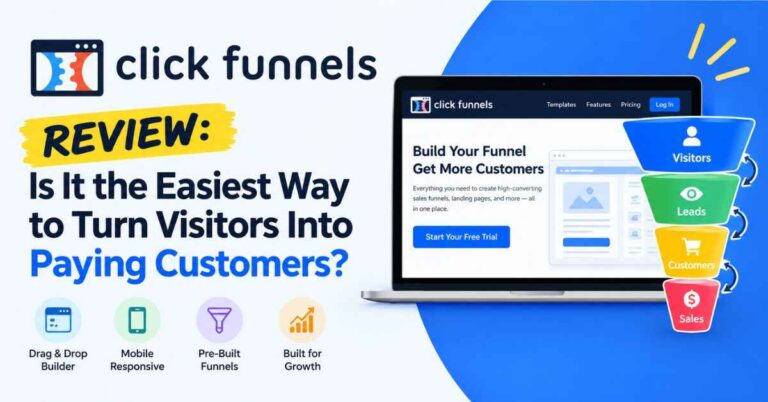
ClickFunnels is a platform that lets you build the whole path a customer takes, from the first click to the final purchase, in one place.
That path is called a funnel. Think of a good restaurant. You walk in, you get a clear menu, you order, someone offers dessert, you pay, and a few days later you get a thank-you note. Every step flows into the next one.
A funnel does that for your online business. Instead of sending visitors to a website full of menus and links, where they can wander off, you guide them one step at a time toward one action. Sign up, book a call, or buy.
Inside ClickFunnels you get the pages, the checkout, the email tools, and the automation. Many people use it to sell courses and digital products too. It’s been around since 2014, so it isn’t a brand-new app that might disappear. It has grown a lot since then, and today it covers far more than the old “just a page builder” days.
Who Should Use ClickFunnels? The People Who Benefit Most
Okay, here’s the heart of it. These are the groups I see getting real value, and why it works for each.
1. Coaches and consultants
If you sell your time or your know-how, you need people to take one specific step: book a call or sign up for a program.
A regular website makes that harder than it should be. A funnel makes it easy. You can set up a simple application page, ask a few questions, and send only the right people to your calendar. It saves you from hours of calls with people who were never going to buy.
Picture a business coach who used to take every inquiry. Her week was packed with calls that went nowhere. After switching to an application funnel, her calendar filled with people who’d already read about her work and knew roughly what she charged. Same coach, same service, better conversations.
2. Course creators and digital product sellers
You know something worth teaching. Now you need a place to sell it, collect payment, deliver access, and follow up.
ClickFunnels handles the selling side really well. You can build a sales page, a checkout, an upsell, and a thank-you page, then send automatic emails afterward. If you’re launching your first course, having it all in one place means fewer moving parts and fewer chances for something to go wrong.
3. Local business owners
Gyms, salons, clinics, home service companies, tutors, photographers. If your customers search nearby, a funnel can turn that search into a real appointment.
A simple example: offer a free consultation or a discount on the first visit in exchange for an email address. The funnel sends a reminder and a booking link. You don’t have to chase anyone. A local plumber doesn’t need a fancy ten-page website. A clear offer with an easy way to say yes is usually enough.
4. Small product sellers
If you sell physical products, a funnel lets you spotlight one item instead of making shoppers dig through a full store. You can add a bundle at checkout or a small bonus that raises the order value.
This works well for niche products, new launches, or single hero items. It gives your visitor one clear choice instead of fifty.
5. Freelancers and agencies
If you build marketing systems for clients, ClickFunnels can speed up delivery. You can launch a working funnel in days instead of weeks, and the higher plans give you more workspaces to keep client projects separate.
For a freelancer, that can mean taking on more clients without drowning in tech work.
6. Affiliate marketers and list builders
A lot of marketers use funnels to collect email addresses before sending people to an offer. It’s a smart habit. If you only send traffic straight to someone else’s page, you lose those visitors forever. If you collect their email first, you can follow up, build trust, and stay in touch.
Owning your list is a big deal. Platforms change their rules, and social accounts get restricted. An email list is yours.
7. Beginners with a clear offer
Maybe you’ve never sold anything online before. You have an idea, and you want a simple path from “I made this” to “someone paid for it.”
A funnel gives you that structure. You’re not staring at a blank page wondering what to build. The templates show you roughly what to put where, so you can focus on your message.
👉 Curious how a funnel looks once it’s built? You can peek inside and try it yourself with the free trial:
The Signs ClickFunnels Is a Good Fit for You
Not sure which group you’re in? Here’s a quick gut check. If most of these sound like you, you’re probably in the right place.
You already have something to sell, or you’re very close. Even a rough offer counts.
You want customers to take one clear action, not browse around.
You’re tired of juggling separate tools for pages, email, and checkout.
You’d rather build things yourself than pay a developer every time you want a change.
You like the idea of follow-up emails that send on their own.
You’re ready to test, tweak, and improve, not just publish once and hope.
If you nodded along to most of that, ClickFunnels is likely worth a serious look.
What You Actually Get (Without the Buzzwords)
Let me skip the giant feature list and cover what helps in real life.
It doesn’t require a tech background. The builder is drag and drop. You pick a template, click a headline, type your own words, and swap an image. If you’ve ever put together a slideshow, you’ll feel okay here. A basic funnel can be live in a day or two.
Templates save you from the blank page. There are ready-made layouts for collecting leads, selling products, running webinars, and booking calls. They’re based on setups lots of marketers have used, so you’re not guessing where things go. Some look a little dated, but they’re easy to restyle.
Everything lives in one place. Pages, checkout, email, contacts, and automation all sit in one account. Fewer logins, fewer connections, fewer things to break.
It’s built around selling. Features like order bumps and one-click upsells help raise how much each customer is worth. Someone who came in for a $27 product might happily add a $17 extra at checkout. On a plain website, that offer doesn’t exist unless you build it yourself.
Follow-up runs on its own. Most people don’t buy the first time. With built-in email, you can set up a sequence once: a welcome note on Monday, a helpful tip on Wednesday, a gentle nudge on Friday. It keeps working while you do something else.
No limits on funnels, pages, or visitors. On the current plans, you can build as many as you like and not worry about traffic spikes. If a post suddenly goes viral, you won’t get hit with a surprise bill for the attention.
What Does It Cost?
Let’s be honest about price, because it’s part of figuring out who should use ClickFunnels.
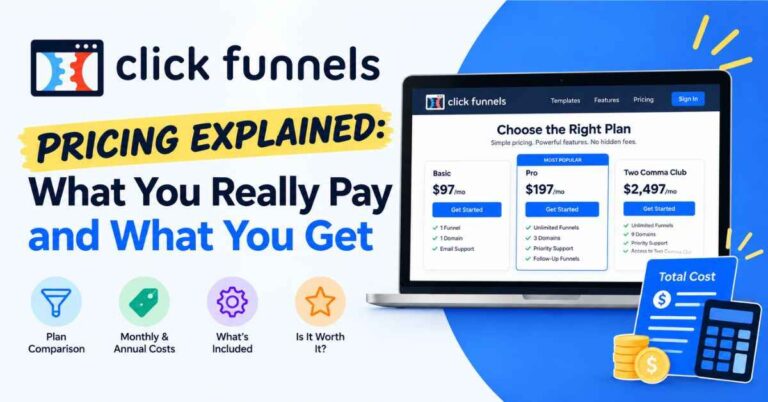
There are three main monthly plans. Launch is $97 a month, Scale is $197, and Optimize is $297. There’s also an annual-only plan called Dominate, which is built for larger operations. Paying yearly lowers the monthly cost, and email sending has a small extra charge per thousand emails.
Launch is where most beginners start. Scale makes sense once you want advanced automation, more domains, or deeper connections with other software. Optimize adds the ability to run your own affiliate program inside the platform.
Is that expensive? Compared with a free website builder, yes. Compared with paying separately for a page builder, an email service, a checkout tool, and a course host, it often comes out about the same or even less, and everything already talks to each other.
A simple way to think about it is to ask, “What is one new customer worth to me?” If you sell a $500 coaching package and a funnel helps you land one extra client, it covers itself. If you sell a $20 ebook, you’ll need more volume, though a funnel can also build your list and sell add-ons.
There’s also a 14-day trial, so you can look around and build something before you commit. That’s the best way to decide, honestly. You’ll know within a few days whether the builder feels natural.
Real-Life Examples
Sometimes it’s easier to picture the thing than to read about it. Here are a few common setups.
The webinar funnel. A financial coach runs a free 45-minute training. People register on one page, get reminder emails, watch the session, and see an offer at the end. It’s a classic, and there are templates made for it.
The free-plus-shipping offer. A small brand gives away a sample and charges only for shipping. At checkout, it offers a bigger bundle. Customers try before they commit, and the brand grows its email list at the same time.
The application funnel. A consultant doesn’t want every inquiry. Interested people fill out a short form, and only good fits get a link to book a call. It saves hours and fills the calendar with people worth talking to.
The lead magnet. A blogger offers a free checklist in exchange for an email, then sends a short series of emails recommending a paid resource. It’s small, but it works around the clock.
The simple course launch. A creator sets up a sales page, a checkout, and an automatic access page, plus a few emails to keep students engaged.
None of these are complicated. The best funnels usually aren’t. They’re clear and simple.
Who Probably Doesn’t Need ClickFunnels
I’d rather save you money than make a sale, so here’s the other side.
If you only need a basic informational website, like a portfolio, a blog, or a “contact us” page, a simpler website builder will cost less and do the job fine.
If you’re still figuring out what to sell, hold off. A funnel helps you sell something. It can’t invent the something. Get your offer clear first, even in rough form.
If you only need one landing page, a lighter, cheaper tool might be a better match. ClickFunnels pays off when you use more than one piece of it.
If money is extremely tight right now, and $97 a month would cause real stress, it may be smarter to wait until you have a bit more breathing room or a first sale in hand.
If you’re not willing to learn anything new, it will feel frustrating. It’s not hard, but it does take a couple of days to get comfortable.
Being in one of these groups doesn’t mean you’ll never use it. It just means the timing might not be right yet.
A Few Honest Downsides
Nothing is perfect, and you’d see through me if I pretended otherwise.
The dashboard can feel busy at first, since there’s a lot inside. Give yourself a couple of days and follow the training, and it starts to click.
Some templates look a bit old. It’s an easy fix since you can restyle them, but don’t expect every one to look perfect out of the box.
And it won’t create your offer for you. This one matters most. ClickFunnels is a vehicle. If your offer is unclear, or nobody wants it, the best funnel in the world won’t fix that.
I think that’s why some people say it “didn’t work” for them. They expected the software to do the thinking. It won’t, but it makes the doing much easier.
Tips If You Decide to Try It
If you do jump in, here’s how I’d spend those first few days.
Start with one funnel. Don’t build five. Pick your best offer and build a simple path around it.
Keep pages short. One headline, one clear benefit, one button. Resist the urge to add extra links.
Use a template, then make it yours. Change the words until it sounds like you talking to a real person.
Write emails like you’d write to a friend. Short and honest beats polished and stiff.
Check your numbers after a week. If lots of people visit but few sign up, the headline or offer probably needs work. If they sign up but don’t buy, look at your follow-up emails.
Change one thing at a time. Small, steady tweaks turn an okay funnel into a good one.
So, Is ClickFunnels for You?
Let me wrap this up in plain terms.
ClickFunnels is a strong fit if you have an offer ready to sell, you want your pages, checkout, email, and follow-up in one place, and you’d rather spend your time on your business than on fixing tech problems. Coaches, course creators, local businesses, product sellers, freelancers, marketers, and beginners with a clear idea all tend to do well with it.
It’s less of a fit if you just need a simple website, you’re not ready to sell yet, or your budget can’t handle it right now. And that’s okay. Knowing that is part of making a smart choice.
For the right person, it quietly simplifies everything. You stop wondering how all the pieces connect. You start focusing on what actually grows a business: a good offer, a clear message, and steady follow-up.
Final Thoughts
Choosing a tool shouldn’t take weeks. If you’ve read this far, you probably already have a gut feeling about whether you’re in the “yes, this is me” camp or the “maybe not yet” camp. Trust that feeling.
If it’s a yes, the next step isn’t more research. It’s opening the builder, picking a template, and seeing what happens. With a free trial available, there’s very little standing in your way.
Build something small. Publish it. Watch what people do. You’ll learn more in one weekend of doing than in a month of reading articles, even a helpful one like this, I hope.
Quick note before you go: some links in this post are affiliate links. If you sign up through one, I may earn a small commission at no extra cost to you. I only recommend tools I think are genuinely useful, and the opinions here are my own. Thanks for reading, and for supporting the site.