Is GoHighLevel Worth It? A Straight Answer for Agencies, Coaches and Local Businesses
Is GoHighLevel worth it? It’s one of the most common questions people type in once they get tired of juggling five different marketing tools, and I don’t think a flat “yes” or “no” helps anyone. For some businesses it pays for itself within a month or two. For others it becomes an expensive dashboard they log into twice and forget about.
So instead of telling you what to think, I’ll show you how to work out your own answer. We’ll look at what the platform actually does, where it earns its price, where it doesn’t, and what to check before you spend a cent. By the end you should know which side of the line you’re on.
The Leak You Probably Don’t Know About
Let me start with a small story. It’s an example, not a real client, but I’d bet you’ve seen something like it.
Picture a woman who runs a small home-cleaning business. She’s good at her job, and her customers love her. Her marketing is simple: a website with a contact form, a Facebook page, and a phone number.
On Tuesday afternoon, a woman fills out the form asking for a quote. The form sends an email to an inbox the owner checks once a day, usually at night. She sees it at 9 p.m., decides it can wait until morning, and replies the next day around noon.
By then, that customer has already messaged two other cleaning companies. One of them answered within ten minutes. Guess who got the job.
The cleaning business did nothing wrong, and the work was great. The problem was timing and follow-up, and the owner never even found out she’d lost that lead.
That’s the leak. It rarely shows up as a dramatic failure. It’s a slow drip of small moments where someone was interested and nobody got back to them in time.
Why This Costs More Than You Think
Most people underestimate this because the loss is invisible. You can see a bill for software. You can’t see the customer who quietly went elsewhere.
Here’s a simple way to make it visible. Think about how many inquiries you get in a month. Now think about how many you replied to within the hour. Then think about how many you followed up with a second and third time.
If you’re honest, the answer is probably “fewer than I’d like.” Most small businesses follow up once, if that. Yet a large share of sales happen after repeated contact. People get busy, forget, or just need a nudge.
Then there’s the tool pile. A landing page builder, an email service, a scheduling app, a text-message tool, a form plugin, maybe a CRM on top. Each costs a monthly fee. Each needs its own setup. And when something breaks between two of them, you’re the one stuck sorting it out.
So you end up paying twice. You pay in subscriptions, and you pay in leads that slip through the gaps. That’s the real context for asking whether GoHighLevel is worth it, because the platform is built to close both of those gaps.
What GoHighLevel Actually Is
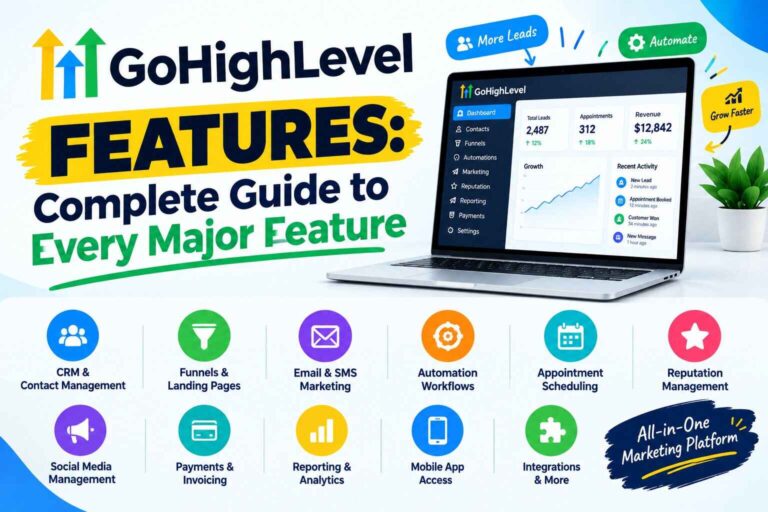
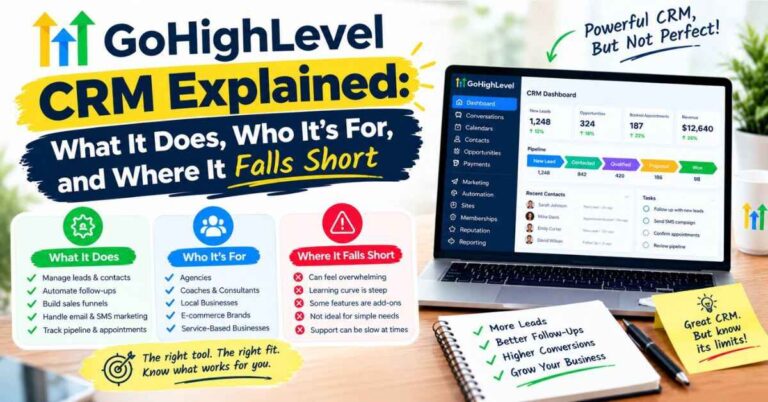
GoHighLevel is an all-in-one platform for marketing, sales and client management. Instead of subscribing to a separate tool for each job, you get most of them in one place, all connected.
It started as a platform for marketing agencies, which is why the agency features are so strong. But local businesses, coaches, consultants and freelancers use it too.
Here’s the short version of what’s inside:
- A CRM that keeps every contact and conversation in one spot
- A builder for funnels, landing pages and simple websites
- Email and text-message marketing
- Online booking and calendars
- Automation workflows that run in the background
- Pipelines to track where each lead stands
- Review requests and reputation tools
- Missed-call text back
- Membership and course hosting
- Invoicing and payments
- White-label options for agencies
The key idea isn’t any single feature. It’s that these pieces share the same data. When a lead fills out a form, the CRM, the text follow-up, the booking calendar and the pipeline all know about it automatically. Nothing gets copied by hand.
Want to see how these pieces connect before reading further? You can have a look around GoHighLevel here and see the layout for yourself.
What You Actually Get Out of It
Features lists are easy to write and hard to care about. So let me describe what changes in a normal week once a setup like this is running.
Fast replies without you being glued to your phone
Go back to the cleaning business. With an automated setup, the moment that form is submitted, the customer gets a text: “Thanks for reaching out, here’s a link to pick a time for your quote.” It goes out in seconds, even at 9 p.m., even when the owner is asleep.
Speed matters more than most people realize. The first business to respond often wins, and automation lets you be that business without working around the clock.
Follow-up that doesn’t depend on your memory
Most follow-up fails for one boring reason: people forget. Not because they’re lazy, but because they’re busy.
Workflows fix that. You decide once that if someone doesn’t reply in two days, they get a friendly nudge. If they still don’t reply, they get one more message a few days later. You build it a single time, and it runs for every lead.
You’re not being pushy. You’re being consistent, which is something humans are surprisingly bad at when they’re juggling a dozen other things.
One screen for the whole story
This sounds minor until you’ve lost an hour trying to figure out where a lead came from. In a connected system, you open a contact and see the whole history: where they found you, what you sent, whether they opened it, and whether they booked.
For anyone who has ever pieced together a customer’s story from three different tools, that’s a real relief.
Missed-call text back
If you run a service business, this one is worth paying attention to. When someone calls and you can’t answer, the system sends them a text right away saying something like “Sorry we missed you, how can we help?”
Think about an electrician up a ladder or a barber with a client in the chair. They can’t pick up. A missed call usually means the caller tries the next number on the list. A quick text keeps the conversation alive.
It’s a tiny feature, and for a lot of local businesses it’s the one that makes the whole thing feel justified.
Review requests on autopilot
Reviews can decide who gets the call, but almost nobody has time to ask for them. The platform can send a review request after a job is finished, automatically. It’s not glamorous, but steady reviews build trust over months.
Agency tools that save serious time
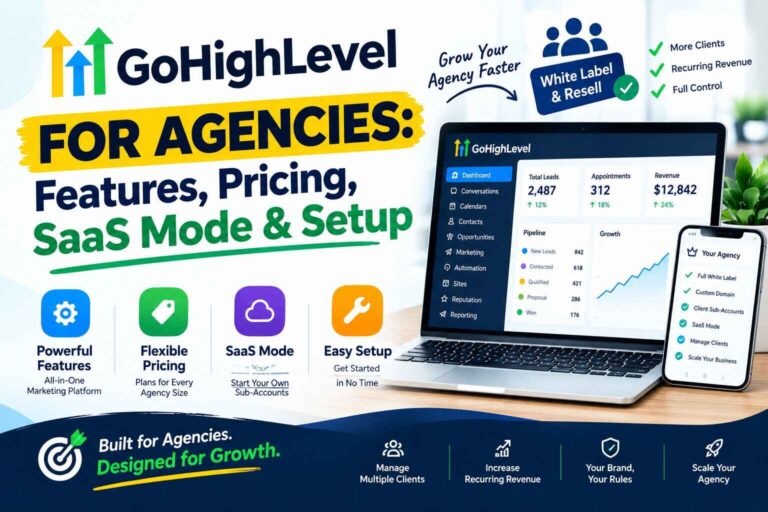
If you work with clients, this is where the value really stacks up. You can run separate sub-accounts for each client, build a setup once, and save it as a template (snapshots, in their terms) to load into a new client’s account quickly.
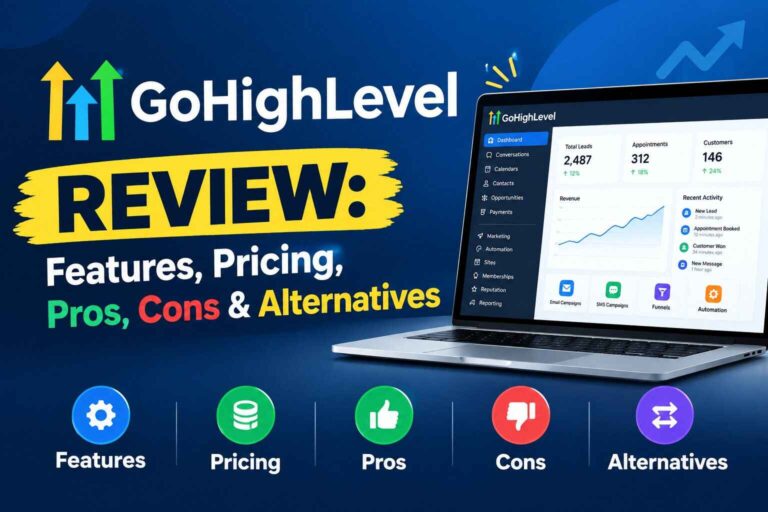
Instead of rebuilding the same funnel and follow-up sequence from scratch every time, you copy it and tweak the details. White-labeling also lets agencies put their own branding on the platform. Whether you’d go that route depends on your goals, but it’s a real option. Also read: GoHighLevel Review 2026: Features, Pricing, Pros, Cons & Alternatives
So, Is GoHighLevel Worth It? Let’s Do the Math
Time for the part that matters. Here’s a simple method that works better than any opinion, mine included.
Step 1: Add up what you pay now.
List every tool you’d replace: funnel builder, email platform, scheduler, CRM, text service, form tool. Write down the monthly cost of each. Be honest and include the small ones, because they add up.
Step 2: Check the current GoHighLevel pricing.
Look at the plans on the official sales page. Plans and prices change, so I won’t quote numbers here that might be outdated. Read what’s included in each tier.
Step 3: Estimate your usage costs.
Text messages, calls and email sending are typically billed by use, on top of the plan. Estimate how many messages you’d send in a month and what that might cost.
Step 4: Put a value on one extra customer.
This is the step most people skip. How much is a new customer or client worth to you? If you run a cleaning business, maybe a repeat client is worth hundreds over a year. If you’re an agency, a retained client might be worth far more.
Step 5: Compare.
Now ask a simple question. How many extra customers per month would it take to cover the platform’s total cost?
For many businesses, the answer is one or two. If better follow-up and faster replies could realistically win you one extra customer a month, the platform can pay for itself. If you only get a handful of leads a month and they’re already handled well, the math gets harder.
That’s the honest core of “is it worth it.” It’s less about the software and more about how many leads you currently lose, and what each one is worth.
Who Gets the Most Value
Here are the situations where I think it makes the most sense.
Agencies and freelancers with clients
If you manage marketing for other businesses, the platform can replace a stack of tools and let you deliver a consistent system to every client. The template approach alone can save hours with each new account. Plenty of freelancers find that the time saved is what makes it worth it.
Local service businesses
Think plumbers, cleaners, salons, gyms, clinics, real estate agents, and similar. These businesses live and die by fast replies and repeat customers. Missed-call text back, instant follow-up, appointment reminders and review requests all hit the exact pain points they deal with.
Take a small gym as an example. Someone fills out a trial-class form. They get an instant text with a booking link, a reminder the day before, and a follow-up afterward asking how it went. If they don’t sign up, they get a gentle nudge a week later. All of it runs without staff touching it.
Coaches and consultants
If your business runs on booked calls, automating the scheduling, reminders and follow-up frees up real time. Picture a coach who used to spend an hour a day on emails just arranging call times. With online booking and automatic reminders, that hour goes back to actual coaching.
Recognize your own business in one of these examples? It might be worth seeing how GoHighLevel handles it and checking the current plan options.
When It’s Probably Not Worth It
I’d rather lose a sale than have you waste money. Here are the situations where I’d hold off.
You have almost no leads yet. The platform helps you handle leads better. It doesn’t create them. If you’re not getting inquiries, your first priority is getting visibility, not buying more software.
Your needs are very simple. If all you do is send a monthly newsletter, a simple email tool will serve you for far less money. Paying for a full system you barely touch is wasteful.
You don’t want to learn a new system. This matters. GoHighLevel isn’t hard exactly, but it’s big. Expect to spend a few weeks getting comfortable. If you want something that works in ten minutes with zero learning, this isn’t it.
You need best-in-class everything. All-in-one tools are strong because everything connects, but a specialist can beat them in one area. If you need the most advanced email design tool or the most powerful course platform on earth, you may still want a dedicated product for that piece.
Your budget is very tight. If the monthly cost plus usage fees would strain your finances while you have low volume, it’s reasonable to wait until your lead flow justifies it.
None of these are knocks on the platform. They’re just signs that the timing isn’t right.
The Costs People Don’t See Coming
Since we’re being honest, let’s cover the hidden side of the price.
Usage fees. The plan itself is one cost. Texts, calls and emails are usually charged separately based on usage. For light users it’s small. For heavy senders it adds up, so estimate before you commit.
Text message registration. If you’re in the US and want to send business texts, carriers require you to register your business and messaging purpose. This takes time, and a sloppy application can be rejected. It’s an industry rule rather than a flaw of the platform, but it means you can’t always send texts on day one.
Your time. Learning the system and building your first automations takes real hours. Think of this as an investment, but it’s still a cost. Budget a few weeks before things feel smooth.
Maybe a little help. Some people hire a freelancer to build their first setup. That’s optional, but it’s worth knowing that plenty of users start with a template or some outside help.
Knowing these upfront makes the decision cleaner. Surprises are what turn a good purchase into a regretted one.
Five Questions to Ask Yourself Before You Decide
If you’re still on the fence, answer these honestly:
- Am I losing leads right now because of slow replies or forgotten follow-up? If yes, that’s a strong sign.
- Do I pay for three or more tools that GoHighLevel could replace? If yes, consolidating may save both money and headaches.
- What is one new customer worth to me? The higher the number, the easier the math.
- Am I willing to spend a few weeks learning a new platform? If not, wait.
- Do I have a steady flow of leads, or at least a plan to get one? The platform multiplies what you have. It can’t replace it.
If you answered yes to most of these, there’s a good chance it’s worth a serious look. If you answered no to most, hold off and revisit later.
How to Test It Without Overthinking
A good way to approach this is to start small and prove the value before you build everything.
Pick one problem. Maybe it’s following up with new inquiries. Set up a simple automation: a form, an instant text, a booking link, and one follow-up if they don’t respond. Run it for a month and watch what happens.
If you see more booked calls or fewer lost leads, you have your answer, and you can expand from there. If nothing changes, you’ve learned something valuable without building a giant machine.
A few small tips for the early days:
- Use templates. Don’t build from zero. Adapt what already exists.
- Test as a customer. Fill out your own forms and check that every text and email lands the way you expect.
- Watch your usage. Check messaging costs during the first month so you’re never surprised.
- Be patient. The first two weeks are the bumpiest. It gets noticeably easier after that.
My Honest Verdict
So, back to the question we started with. Is GoHighLevel worth it?
If you’re an agency, a local service business or a coach with real leads coming in, and you’re tired of duct-taping tools together, I think it’s worth serious consideration. The combination of connected data, solid automation and agency features is hard to match in one place. For many businesses, catching just a few extra leads each month can cover the cost.
If you’re brand new with no leads, have very simple needs, or don’t want to learn a new system, it’s probably smarter to wait. There’s no shame in that. Buying the right tool at the right time beats buying a great tool too early.
The best approach is the unglamorous one. Do the math from earlier, check the current pricing yourself, and decide based on your own numbers.
If your numbers look promising, the next step is simply to look at GoHighLevel’s current plans and see whether the details fit your business. No rush, and you’re the best judge of what’s worth it for you.
Frequently Asked Questions
Is GoHighLevel worth it for a small business?
It can be, especially for service businesses that depend on fast replies and follow-up. If you only have a few leads a month, run the numbers first, because the value depends on how many leads you currently lose.
Is GoHighLevel worth it for beginners?
It’s more suited to people who have at least some leads or clients. Beginners can use it, but expect a learning curve, and consider whether a simpler tool fits your stage better.
What are the extra costs beyond the plan?
Usage-based charges for texts, calls and emails are typically separate. Check the official pricing page for current details before you decide.
Can it really replace my other tools?
For most core jobs like CRM, funnels, email, texts and booking, yes. Some people keep a specialist tool for one specific need, such as advanced email design.
How long does it take to learn?
Most people feel comfortable after a few weeks of regular use. Starting with one simple automation makes the process much less overwhelming.
One Last Thing
Software decisions feel bigger than they look, because the tool you pick shapes how you work every day. Take your time and be honest about where your business is right now.
I hope this gave you a clearer way to answer whether GoHighLevel is worth it for you, without the usual hype. If you want to explore it yourself, the link is below.
Take a look at GoHighLevel here →
Affiliate disclosure: Quick heads-up: some links in this post are affiliate links. If you click one and decide to sign up, I may earn a small commission at no extra cost to you. It helps support this blog. I try to be upfront about the downsides of anything I write about, and I’d rather you skip a tool than buy something that doesn’t fit.