Best ClickFunnels Alternatives in 2026: 6 Options, Honestly Compared
If you’re hunting for the best ClickFunnels alternatives, I’m guessing something nudged you there. Maybe the price. Maybe a friend who swears by a different tool. Maybe you just like seeing all your options before you spend money, which is a smart habit.
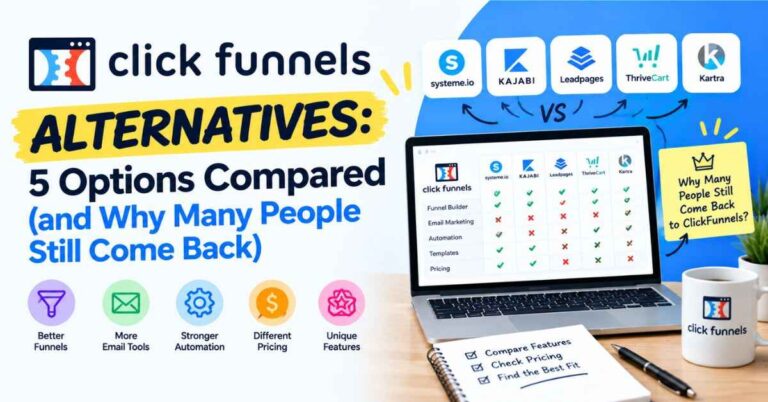
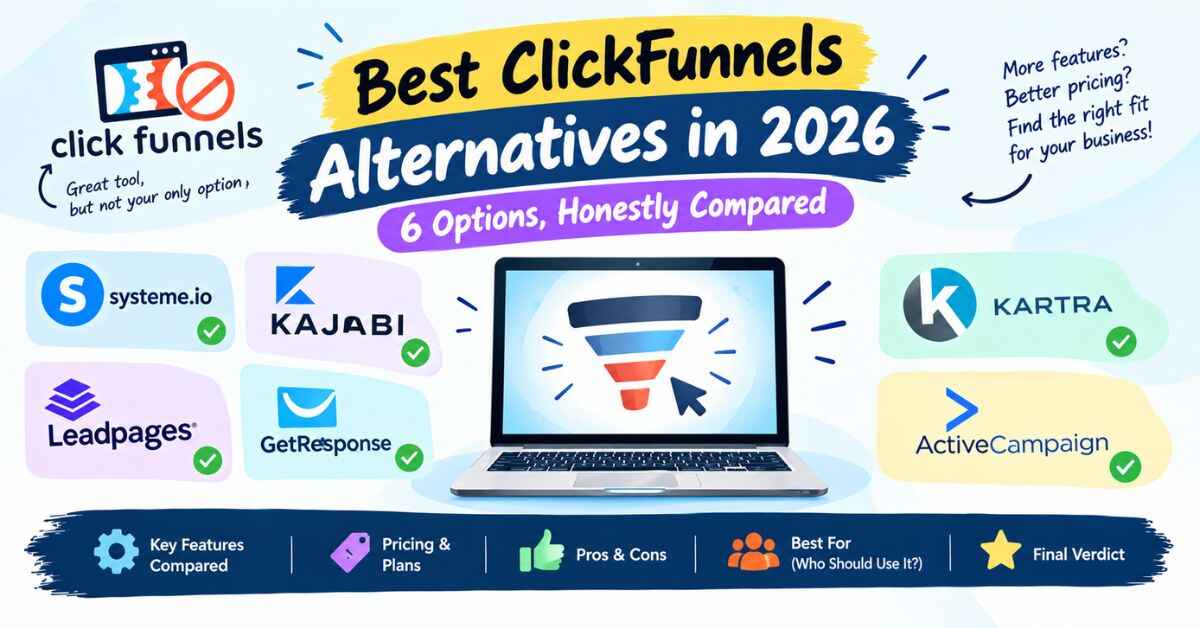
Here’s what I want to do. I’ll walk through six tools people commonly compare with ClickFunnels, tell you what each does well, where each one struggles, and who should pick which. I’ll also tell you where I think ClickFunnels still comes out ahead, because for a lot of people it does. No hype, no pretending one tool wins every round.
Let’s start with why this search is harder than it looks.
Why Every “Best Alternatives” List Feels the Same
You’ve probably noticed this already. You search for alternatives and every article crowns a different winner. One says Tool A is the best. The next says Tool A is overrated and Tool B is the real answer. A third lists ten options, each with the same three bullet points.
After an hour, you’ve got twelve tabs open, a half-finished spreadsheet, and the quiet feeling that you know less than when you started.
That’s because most lists treat these tools like they’re all the same kind of thing. They aren’t. Some are built to sell. Some are built to teach. Some are built to run an agency. Some are just landing page builders. Ranking them in one line is like ranking a pickup truck, a sports car, and a bicycle. The “best” depends on where you’re going.
So instead of crowning a winner, I’ll sort these by who they fit. That way you can skip straight to the one that sounds like you.
What Switching the Wrong Way Actually Costs
Before we dive in, a quick word on why this matters.
Switching tools isn’t free, even when the new tool is cheaper. You rebuild pages. You move contacts. You rewrite emails. You re-learn menus. You wait for connections to sync, and you hold your breath every time a payment goes through for the first time.
I’ve talked to people who switched three times in a year, chasing a better price or a shinier feature. Each time they lost a weekend, sometimes more. By the end, they’d spent more in time than they’d ever saved in fees, and they still hadn’t made the sales they were hoping for.
The goal isn’t to find the perfect tool. It’s to find a good-enough tool you’ll actually use, and stick with it long enough to learn what works.
Keep that in mind as we go.
First, What Is ClickFunnels?
Let’s set the baseline, so the comparisons make sense.
ClickFunnels is a platform that lets you build the whole path a customer takes, from the first click to the final purchase, in one place.
That path is called a funnel. Think of a good restaurant. You walk in, you get a clear menu, you order, someone suggests dessert, you pay, and a few days later you get a thank-you note. Every step flows into the next one.
A funnel does that for your online business. Instead of dropping visitors onto a busy website where they wander off, you guide them one step at a time toward one action: sign up, book a call, or buy.
Inside ClickFunnels you get pages, checkout, order bumps and upsells, email tools, and automation. It’s been around since 2014, so it isn’t a new app that might vanish. Plans run from Launch at $97 a month to Scale at $197 and Optimize at $297, plus an annual-only plan for larger operations.
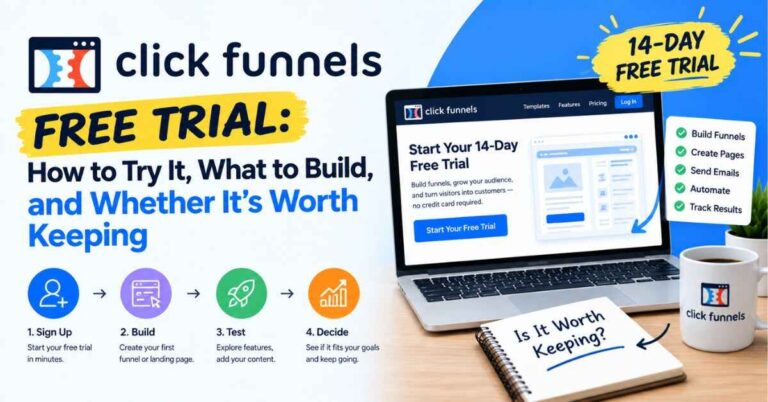
Every plan includes unlimited funnels, pages, and visitors, and there’s a 14-day trial so you can look around first. Also read: ClickFunnels Review: Is It the Easiest Way to Turn Visitors Into Paying Customers?
The Best ClickFunnels Alternatives, Ranked by Who They Fit
Here are six options, each with an honest take.
1. Systeme.io: best for tight budgets
If cost is your main worry, this is usually the first name that comes up. It offers a permanent free plan, and the paid plans are far cheaper than ClickFunnels. It covers funnels, email, courses, and checkout, and it doesn’t take a cut of your sales on any plan.
Where it shines: Price. For a solo seller who wants a lot for very little, it’s hard to beat. It’s a good fit for beginners watching every dollar.
Where it struggles: It’s lighter and broader than it is deep. Templates and design flexibility tend to feel more basic, and reviewers mention limits on things like funnels, automations, and tags on the free plan.
Best for: Solopreneurs testing an idea or selling a small digital product.
2. GoHighLevel: best for agencies
GoHighLevel is a heavyweight built around CRM and automation, and it’s popular with agencies that run marketing for many clients. Its starter plan has the same headline price as ClickFunnels Launch, with higher plans that unlock unlimited client accounts and reselling.
Where it shines: Deep CRM, client management, and running lots of accounts under one roof.
Where it struggles: The learning curve is steeper, and usage-based charges for texting, calls, and email get billed on top of your plan, so the real cost can climb.
Best for: Agencies and service businesses that need CRM muscle.
3. Kartra: best for heavy automation and memberships
Kartra is another all-in-one with a long list of features, including strong automation, memberships, and courses.
Where it shines: Depth. It handles complex setups and can bundle a lot of tools in one account.
Where it struggles: Pricing follows your contact count, so your bill steps up as your list grows. There’s no free tier, and some features people assume are standard sit on the higher plans.
Best for: Course and membership businesses that want heavy automation and are comfortable with higher prices.
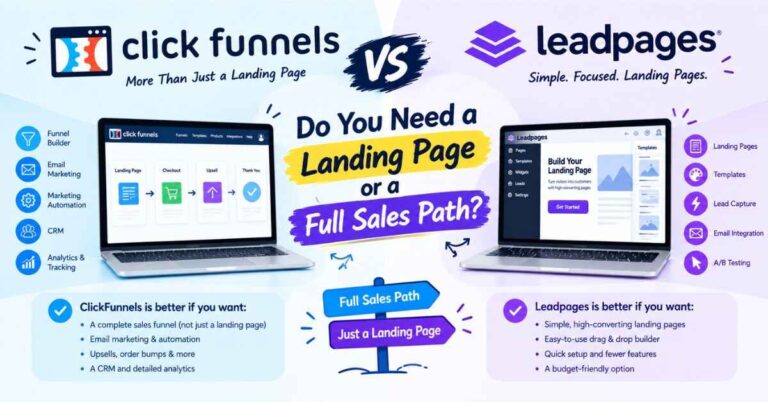
4. Leadpages: best for simple landing pages
Leadpages is a landing page builder that’s easy to learn. It includes pop-ups and alert bars, offers unlimited traffic, and has a 14-day trial.
Where it shines: Simplicity and lower entry price. It’s good at straightforward pages and lead capture.
Where it struggles: It isn’t a full funnel platform. The Standard plan caps you at 5 landing pages and doesn’t accept payments, and A/B testing sits on the Pro plan. You’ll also need a separate tool for follow-up emails.
Best for: People who already have email and checkout sorted and just need pages.
5. Kajabi: best for course creators
Kajabi leans toward courses, memberships, and communities, with a polished student experience.
Where it shines: Teaching tools. If delivering lessons and running a community is your business, it’s built for that.
Where it struggles: It’s a premium product with premium pricing, limits tied to contacts and products, and some features like affiliate tools on higher tiers. Selling tactics aren’t its center.
Best for: Established course creators who care most about the classroom.
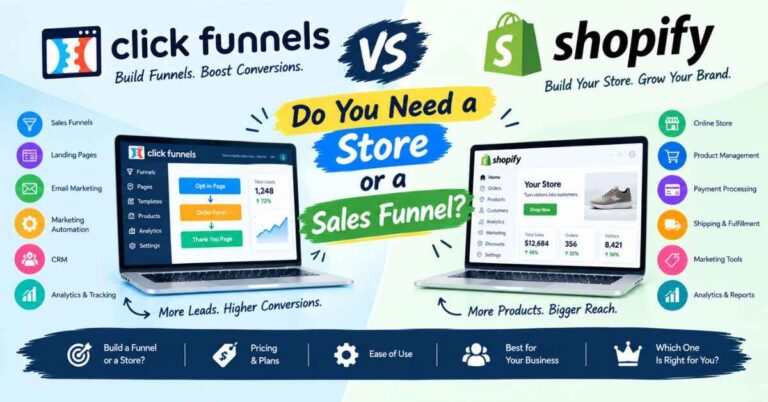
6. Shopify: best for full online stores
Shopify is a full ecommerce platform for running a store with lots of products, variants, inventory, and shipping.
Where it shines: Store management for big catalogs, plus a huge ecosystem of apps and themes.
Where it struggles: The plan price is only part of the cost. Card processing fees apply on each sale, and many stores add paid apps. It also treats your product as one item on a shelf, not as the star of a focused pitch.
Best for: Sellers with many physical products who need serious store tools.
👉 Want to see how ClickFunnels stacks up with your own eyes? You can look around with the free trial and judge it yourself:
So Where Does ClickFunnels Fit?
Let me be straight with you.
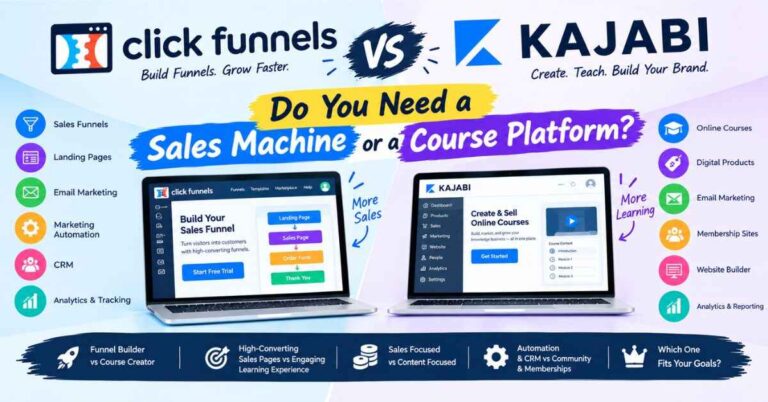
ClickFunnels isn’t the cheapest. Systeme.io beats it on price, and that’s just a fact. It isn’t the best for agency-scale CRM, since GoHighLevel is built for that. It isn’t a full course platform like Kajabi. And it isn’t a full store like Shopify.
What it’s great at is one specific thing: helping you build a clear path from visitor to buyer, fast, in one place. If your goal is to turn attention into sales, with pages, checkout, upsells, and follow-up working together, it’s one of the most focused tools around.
Think of it this way. Some tools are Swiss Army knives. Some are specialized power tools. ClickFunnels is a really good, sharp knife for one job. If that’s your job, it’s a strong pick.
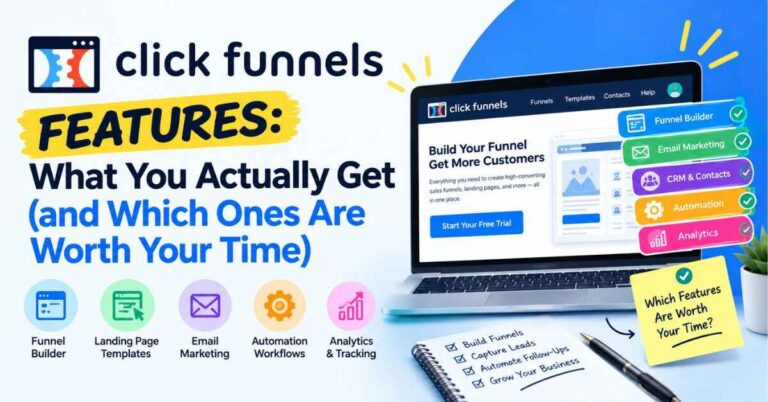
What You Actually Get With ClickFunnels
Let me skip the long feature list and talk about what helps in real life.
You don’t need a tech background. The builder is drag and drop. You pick a template, click a headline, type your own words, and swap the image. If you’ve ever made a slideshow, you’ll feel okay. A basic funnel can be live in a day or two.
Templates save you from the blank page. There are ready-made layouts for collecting leads, selling products, running webinars, and booking calls. They’re built around setups lots of marketers have already used. A few look a little dated, but they’re easy to restyle.
It’s built around selling. Checkout pages, order bumps, and one-click upsells are part of the design. Someone who came in for a $27 product might happily add a $17 extra at checkout. That small bump adds up without needing more traffic.
Everything lives in one place. Pages, checkout, email, contacts, and automation sit in one account. Fewer logins, fewer connections, fewer things to break.
Follow-up runs on its own. Most people don’t buy the first time. You can write a short email sequence once and let it run: a welcome note on Monday, a tip on Wednesday, a gentle nudge on Friday.
No limits on funnels, pages, or visitors. On every plan. If a post goes viral, you won’t get a surprise bill for the attention.
Room to grow. Scale adds unlimited domains, webhooks, API access, the code editor, and more advanced automation. Optimize adds an Affiliate Center so you can run your own affiliate program.
A Quick Way to Choose
If you’re still weighing it up, here’s a plain-English guide.
Choose ClickFunnels if your main goal is selling and you want pages, checkout, upsells, and follow-up in one place. It fits coaches, consultants, course sellers, local businesses, product sellers, and marketers.
Choose Systeme.io if budget is your top priority and you’re okay with a simpler feature set.
Choose GoHighLevel if you run an agency and need deep CRM and client management.
Choose Kartra if you run a course or membership business and want heavy automation.
Choose Leadpages if you only need landing pages and already have email and checkout handled.
Choose Kajabi if polished course delivery matters more than selling tactics.
Choose Shopify if you sell lots of physical products and need real store tools.
I’m not going to pretend ClickFunnels is the answer to everything. If one of the other descriptions sounds more like you, go with it. That’s what this list is for.
Real-Life Examples
Sometimes it’s easier to picture the thing than to read about it. Here are a few setups and which direction tends to make sense.
The coach with a $500 program. She wants an application funnel that filters out casual browsers, a booking page, and automatic reminder emails. ClickFunnels fits nicely, with the whole path in one place.
The new creator with a $19 ebook. He’s watching every dollar and just wants to see if anyone will buy. Systeme.io is a smart place to start. It’s free, it works, and he can upgrade later.
The agency with twelve clients. She needs separate accounts, CRM, and reporting for each client. GoHighLevel was built for this.
The established membership owner. She runs a big community with lots of lessons and thousands of contacts. Kartra or Kajabi could be the better match.
The blogger with a free checklist. She just wants a clean page to collect emails and already has an email service she likes. Leadpages is a good fit.
The clothing shop with hundreds of items. He needs sizes, colors, inventory, and shipping rules. Shopify is the natural match.
The skincare brand with one hero kit. She wants a focused page, a bundle at checkout, and follow-up emails. ClickFunnels fits nicely.
Notice that none of these has a “best tool.” There’s just a best match.
👉 If one of those stories sounded like you, the fastest way to find out is to open a template and spend ten minutes with it:
What About the Price Gap?
Let’s talk about it head on, since price is often why people go looking for alternatives.
ClickFunnels starts at $97 a month on Launch, which is where most beginners begin. Scale at $197 and Optimize at $297 add more room and advanced features. Paying yearly lowers the monthly cost. Email sending carries a small extra charge.
Some alternatives cost less at the start. A few cost more. And the sticker price isn’t always the final bill. Some tools charge based on your contact count, some add usage fees for texts and email, some take processing fees or sell apps on top.
Here’s how I’d think about it. Ask, “What is one new customer worth to me?” If you sell a $500 coaching package and a funnel helps you land one extra client a month, it covers itself many times over. If you sell a $20 ebook, you’ll need more volume, though a funnel can also build your email list and sell add-ons.
And cost isn’t just money. It’s also the time you spend learning the tool. A tool you can start using this week is worth more than a more powerful one you’ll still be figuring out next month.
If your budget is tight right now, there’s no shame in starting with a cheaper tool. You can always move later, once you have a first sale and some breathing room.
The Honest Downsides of ClickFunnels
I’d rather be upfront than pretend this tool is perfect.
It’s not the cheapest option. If you only need one landing page, or if cost is your biggest concern, a lighter or free tool may serve you better. ClickFunnels pays off when you use more than one piece of it.
The dashboard can feel busy at first. There’s a lot inside, so give yourself a couple of days and follow the training. Most people catch on quickly.
Some templates feel a bit old. It’s an easy fix, since you can restyle them.
Email sending carries a small extra charge on top of your plan, so it’s worth keeping an eye on as your list grows.
It isn’t a full course platform or a full store. If those are central to your business, a dedicated tool may serve you better.
And it won’t create your offer for you. This one applies to every tool on this list. If your offer is unclear or nobody wants it, no software will fix that.
That’s why some people say a tool “didn’t work” for them. They expected the software to do the thinking. It won’t, but it makes the doing much easier.
Tips Before You Switch (Or Start)
A few small habits will save you a headache, whichever tool you choose.
Name your biggest problem first. Is it getting buyers, delivering a course, or managing clients? Pick the tool that solves that one.
Write down what you actually need. Pages? Checkout? Email? Courses? Client accounts? A short list keeps you from being dazzled by features you’ll never use.
Use free trials. Most of these tools offer one. Build one real funnel or page, not a practice project.
Check how pricing scales. Ask what happens to your bill when your list doubles.
Think about moving costs. If you already have pages and contacts somewhere, factor in the time to rebuild them.
Pick one and commit for a month. Tool-hopping is one of the most expensive habits in online business.
My Take
After looking at everything, here’s where I land.
There are good alternatives, and some are the better pick for certain people. If you’re on a tight budget, an agency, a course-first creator, or running a big store, one of the others may suit you better, and I’d say so.
But if your goal is to turn visitors into customers with a clear, simple path, and you’d like your pages, checkout, upsells, and follow-up in one place, ClickFunnels is still one of the strongest options out there. It’s built for that job, and it shows.
You don’t need the perfect tool. You need a good-enough one, used consistently, with a clear offer behind it.
Final Thoughts
Comparing tools can feel productive, but at some point it turns into procrastination. If you’ve read this far, you probably already have a gut feeling about which one fits.
Trust that feeling, then test it. Pick a template, build one small funnel, publish it, and watch what people do. You’ll learn more in one weekend of building than in a month of reading lists, even a helpful one like this, I hope.
👉 Ready to see if ClickFunnels fits the way you work? Take a look around and check the current trial details here:
Quick note before you go: some links in this post are affiliate links. If you sign up through one, I may earn a small commission at no extra cost to you. I only recommend tools I think are genuinely useful, and the opinions here are my own. Thanks for reading, and for supporting the site.