High-Ticket vs. Low-Ticket Affiliate Marketing 2026: Which Is Better for a Beginner?
If you’ve spent any time researching affiliate marketing, you’ve run into this debate: High-Ticket vs. Low-Ticket Affiliate Marketing. One camp says small, cheap products are the easy way to start. The other says expensive offers with big commissions are the smarter play. Both sides sound confident, and both have a few success stories to point at. So which one is actually better?
Honestly, neither wins every time. But one of them is probably better for you, and that’s what this post will help you figure out. I’ll explain how each model works, show you the math, share the good and bad of both, and tell you where the 7 Figure Accelerator fits in.
High-Ticket vs. Low-Ticket Affiliate Marketing: The Frustration That Starts This Whole Debate
Let me tell you what usually happens, because chances are you’ll recognize it.
A beginner picks a low-priced product, maybe a $27 e-book or a $15-per-month software tool. They get approved as an affiliate, grab a link, and start posting. After a few weeks, a sale comes in. The commission is eight dollars.
Eight dollars. They’re excited for a moment, then the reality sinks in. To earn something that feels like a real income, they’d need hundreds of those sales. Every month. Each one needs someone to see the content, trust it, click, and buy. And some of those buyers will ask for refunds.
So they hit a wall. Not because they’re doing it wrong, but because the math is demanding. They think, there has to be a better way.
Then they discover high-ticket, and suddenly one sale could be worth hundreds of dollars. The excitement comes back. They jump in.
And then they hit a different wall. Nobody buys expensive things on impulse. People hesitate, ask questions, compare, disappear for a week and come back. The sales that do happen require much more trust, and trust takes time and effort.
That’s the real story. Both paths are hard, just in different ways. The question isn’t which one is easy. It’s which kind of hard fits your life.
What Is Low-Ticket Affiliate Marketing?
Low-ticket affiliate marketing means promoting products that cost relatively little, typically from a few dollars up to maybe a hundred dollars. Think e-books, small online courses, apps, subscriptions, or everyday physical products from big retailers.
The commissions are small too, often a few dollars to a few tens of dollars per sale, depending on the program.
How it usually works: You create content that attracts lots of people, such as blog posts, product reviews, short videos or social posts. A small percentage of viewers click your link, and a smaller percentage buy. Because the price is low, the decision is quick.
What makes it appealing:
- Easy to say yes. Cheap products don’t need much convincing. People buy on impulse.
- Lots of options. Thousands of low-priced offers exist in nearly every niche.
- Lower barrier for buyers. Fewer people worry about wasting money.
- Good for learning. Beginners can test ideas without a big commitment from anyone.
What makes it hard:
- You need volume. Small commissions mean you need many sales, which means lots of traffic.
- Refunds and low margins can eat into earnings.
- Hard to scale without big reach. Building a large audience takes serious time.
- Competition is heavy. Everyone promotes the same popular cheap products.
What Is High-Ticket Affiliate Marketing?
High-ticket affiliate marketing means promoting expensive offers, usually priced in the hundreds or thousands of dollars. Typical examples are coaching programs, professional courses, high-end software, and services.
Because the price is high, the commission per sale is often much bigger too, sometimes hundreds of dollars or more, depending on the program’s terms.
How it usually works: You attract a smaller, more targeted audience, build trust, and guide them through a process like a free training, a webinar or an email sequence. In many programs, the company’s own team handles the sales conversation, and you earn a commission when someone you referred buys.
What makes it appealing:
- Fewer sales needed. A handful of sales can equal many low-ticket ones.
- Quality over quantity. You focus on the right people rather than chasing huge numbers.
- Support is often included. Bigger offers usually come with training, funnels or sales teams.
- Better use of limited time. If you only have an hour or two a day, fewer, bigger wins can feel more manageable.
What makes it hard:
- Longer decisions. Buyers think carefully about big purchases.
- Trust is everything. You need credibility, which takes time to build.
- Slower feedback. You may go weeks without a sale, which is discouraging.
- Higher stakes. Refunds, complaints and mismatched expectations matter more when prices are high.
- Often a bigger entry cost. Many high-ticket training programs cost real money to join.
High Ticket vs Low Ticket Affiliate Marketing: The Math
Numbers help here, so let me show a simple example. These figures are made up to illustrate the idea, not real results or program rates.
Say you want to earn $1,000 a month.
Low-ticket example: If you earn $10 per sale, you’d need 100 sales a month. If one in fifty visitors buys, that’s roughly 5,000 visitors every month, every month.
High-ticket example: If you earn $500 per sale, you’d need 2 sales a month. If one in a thousand visitors buys, that’s about 2,000 visitors a month.
See the difference? On paper, high-ticket needs fewer buyers and, often, less total traffic. That’s the heart of the appeal.
But here’s the catch the math hides: that “one in a thousand” is a guess, and it’s the number that’s hardest to improve. Converting a person into a buyer of a $2,000 product usually requires far more trust, follow-up and patience than converting a buyer of a $20 product. So the work doesn’t disappear. It moves.
The honest takeaway: high-ticket can reduce the quantity of effort and increase the quality of effort. Whether that’s a better trade depends on your strengths.
Side-by-Side Comparison
Here’s a quick overview.
| Low-Ticket | High-Ticket | |
|---|---|---|
| Typical product price | A few dollars to ~$100 | Hundreds to thousands |
| Commission per sale | Small | Larger |
| Sales needed for income goal | Many | Fewer |
| Buying decision | Fast, often impulsive | Slow, careful |
| Trust needed | Low to moderate | High |
| Traffic needed | High volume | Smaller, targeted |
| Typical risk of refunds | Moderate | Can be significant |
| Main challenge | Volume | Trust and conversion |
| Best for | Patient content creators with reach | People who prefer fewer, deeper conversations |
Neither column wins outright. It depends on what you’re good at and how much time you have.
Who Tends to Do Better With Each?
Let me describe a few people. These are examples, not predictions.
The natural content machine. Someone who loves creating lots of posts, videos or articles and doesn’t mind publishing constantly. Low-ticket suits them, since volume is the game and they enjoy it.
The relationship builder. Someone who prefers explaining, helping and building trust over time, and doesn’t mind slower progress. High-ticket may fit better, because it rewards credibility.
The time-poor professional. A person with a day job and an hour or two per evening. Fewer, bigger sales may be more motivating than grinding out hundreds of tiny ones, though they’ll still need consistency.
The cautious beginner on a tight budget. Someone who can’t risk much money. Low-ticket, with free methods, is a sensible starting point, while they learn what works.
The “I’ve tried low-ticket and burned out” person. They’ve done the small-commission grind and want a different approach. High-ticket might be worth exploring, if they can afford any entry cost and aren’t expecting shortcuts.
Quick Pause: Curious About the High-Ticket Side?
If the high-ticket model has you curious, the free training from the 7 Figure Accelerator is a no-cost way to see how one program explains it:
👉 Watch the free 7 Figure Accelerator training
Watch it with a notebook, and compare what you hear against everything in this post.
Where the 7 Figure Accelerator Fits
Let me be specific, since it’s the program I’ve been covering.
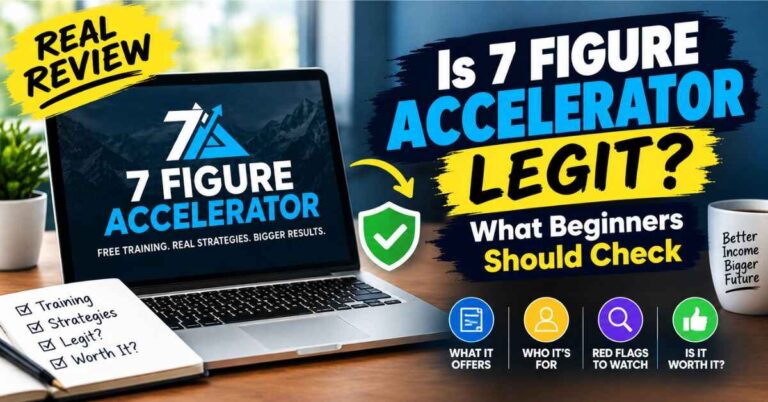
The 7 Figure Accelerator, led by Philip Johansen, is presented as a high-ticket affiliate marketing mentorship. The official registration page promotes a free training for 2026 about earning an extra $1,000 to $5,000 a day through a done-for-you business model, without creating your own product, building websites or doing personal selling. Third-party reviewers describe coaching, community and done-for-you funnels, plus a short-form video approach to attracting traffic without paid ads.
It sits squarely in the high-ticket camp, aimed at people who want a guided path instead of piecing things together alone.
A few honest notes:
- The big income figures are the seller’s claims. The page’s own fine print says results aren’t typical and nothing is guaranteed.
- Reviewers report prices ranging from about $1,000 to nearly $4,000, depending on the source and date. The registration page doesn’t show a price, so you’d see the actual figure at checkout.
- Reviewers also mention add-on offers after the first purchase, so decide your limit in advance.
If you’d like my full breakdown of the free training itself, you can read it here: 7 Figure Accelerator Review: Is This Free Training Worth Your Time (and Email)?
The Honest Downsides of Each
I always think it’s worth being blunt about the weak spots.
Where low-ticket tends to disappoint:
- You can work for months and still earn very little if traffic stays small.
- Competition on popular cheap products is intense.
- Commissions can shrink if products get discounted or refunded.
- It’s easy to feel like you’re on a treadmill.
Where high-ticket tends to disappoint:
- If you don’t build trust, expensive offers won’t sell, no matter how good the commission is.
- The upfront cost of training can be high, and there’s no guarantee of earning it back.
- Waiting weeks for a sale can test your patience.
- Marketing around big income claims can set unrealistic expectations.
- Upsells are common in higher-priced programs.
Neither is a shortcut. Both ask for real work, just in different forms.
So, Which Is Better?
Here’s my plain answer: it depends on you, not on the model.
If you enjoy creating lots of content, have time to build an audience, and want to start with little or no money, low-ticket is a reasonable place to begin. It teaches you the basics at low risk.
If you prefer building trust, want fewer but larger wins, and can comfortably afford any training you’d choose, high-ticket may suit you better, especially if you want coaching and a ready-made system.
And there’s no rule saying you must choose forever. Many people start low-ticket to learn, then move to high-ticket as their skills and confidence grow. Others do both at once, using small commissions for steady practice and bigger ones as they get better.
A Simple Way to Decide
Ask yourself these questions honestly:
- Do I enjoy making lots of content, or do I prefer deeper conversations? Volume points to low-ticket. Relationships point to high-ticket.
- How much time can I give each week? Very limited time may favor fewer, bigger sales, but only if you can commit consistently.
- What’s my budget? If it’s close to zero, start with low-ticket and free learning.
- How patient am I? High-ticket can mean long gaps between wins. Low-ticket gives faster feedback but smaller rewards.
- Do I need help or can I figure it out alone? If you stall without guidance, a coached program might be worth considering later.
- Could I afford to lose the money I’d spend? If not, wait.
If your answers lean one way, you probably have your answer.
Before You Spend Money on Either Path
A few protective habits that apply no matter which model you choose:
- Start with free learning. Several free beginner courses and tutorials exist, so you don’t need to pay to understand the basics.
- Read refund policies in full. Know the window and the conditions.
- Be careful with income claims. Treat headline numbers as best-case scenarios.
- Never pay in the moment. Sleep on any purchase for at least a day.
- Count total cost. Include tools, upsells and payment plan extras.
- Look for independent opinions, not only testimonials chosen by the seller.
Do those, and you’ll avoid most of the regrets people have in this space.
My Honest Take
High ticket vs low ticket affiliate marketing isn’t a contest with one clear winner. It’s a choice between two different kinds of effort. Low-ticket demands volume and patience. High-ticket demands trust and often a bigger upfront investment.
The 7 Figure Accelerator is one example of the high-ticket route, with coaching and done-for-you tools aimed at beginners who want guidance. It may suit people who prefer that structure and can afford it comfortably, and it may not suit people on tight budgets or in a hurry. Its income claims are the seller’s own, and the fine print is honest that results vary.
So learn first, test small, ask hard questions, and take your time. If you’d like to see how the 7 Figure Accelerator explains its approach at no cost, you can watch the free training here:
👉 See the free 7 Figure Accelerator training and decide for yourself
Which path are you leaning toward, high-ticket, low-ticket or a mix? Tell me in the comments. Real experiences from real beginners help more than any sales page can.
Affiliate disclosure: Quick heads-up, the links in this post are affiliate links. If you sign up or buy through them, I may earn a small commission at no extra cost to you. It helps keep this blog running. I only write about things I think are worth a look, and my opinions are my own. Prices and offers change, so please check the current details yourself and do your own research before spending any money. Everyone’s results will be different.