Is ElevenLabs Free? What You Get, What You Don’t, and When to Upgrade
Is ElevenLabs free? Short answer: yes, you can start without paying a cent. Longer answer: the free plan is real and genuinely useful, but there’s one rule hiding in it that trips up a lot of new users, especially anyone planning to put their audio on a monetized channel. I’ll walk you through all of it in plain English, so you don’t find out the hard way after you’ve already published.
The Free Trial Trap Everyone Falls For
Let me tell you a story that plays out more often than you’d think.
A creator hears about an AI voice tool. She’s excited. She finds out there’s a free plan, signs up in two minutes, and pastes in her script. The voice sounds incredible. She feels like she’s discovered a cheat code.
She generates the voiceover for her next three videos, uploads them, and starts earning a little from ads. A month later, she stumbles across a line in the terms she’d never read. The audio she made on the free plan was never cleared for commercial use. Now she’s got a pile of published videos and a nagging question: do I have to redo them?
That’s not a flaw in the tool. It’s just the kind of detail that gets buried when you’re excited and moving fast. And it’s exactly why this post exists.
Why “Free” Is Rarely Simple
Free plans in software come in a few flavors, and they’re not all the same.
Some are a genuine free forever tier, limited but usable. Some are a short trial that quietly turns into a bill. Some let you test everything but lock the download button. And some, like many AI tools, let you create real output but restrict what you can do with it afterward.
If you’ve ever signed up for something “free” and then felt tricked by the limits, you know the irritation. It wastes your time, it makes you distrust the product, and it can cost you real money if you’ve already built something on top of it.
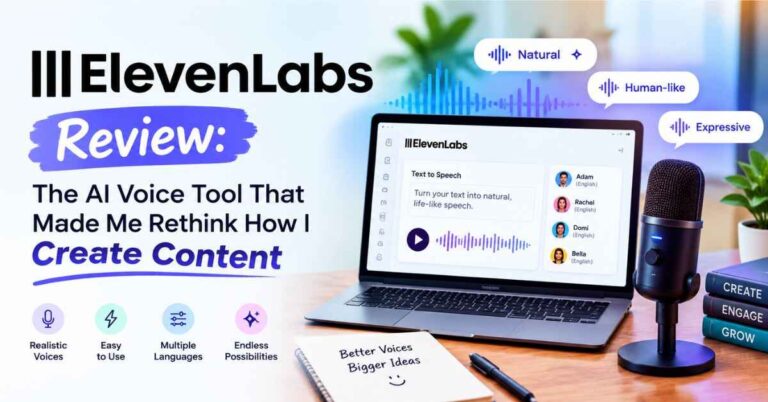
So the useful question isn’t just “is it free?” It’s “free for what, exactly?” Let’s answer that properly. Also read: ElevenLabs Review 2026: The AI Voice Tool That Finally Made Voiceovers Feel Easy
Is ElevenLabs Free? The Honest, Detailed Answer
Here’s the breakdown of what you actually get without paying.
You get a real monthly allowance. The free plan includes 10,000 credits per month, which covers about ten minutes of text-to-speech. A few other sites quote slightly different numbers, so I’d treat ten minutes as the ballpark and check the live page for the exact figure.
You don’t need a card. You can sign up, try the voices, and generate audio without handing over payment details.
You get access to ready-made voices. The free plan includes the pre-made voice library, so you can browse, preview, and find what fits your project.
You can test the real quality. This is the big one. You’re not getting a watered-down demo. You can paste in your own script and hear how it actually sounds.
Now the limits, because honesty matters.
The audio is non-commercial. This is the rule that matters most. ElevenLabs’s own billing documentation says that on the free plan, you can use the content non-commercially with attribution. In other words, it’s fine for personal projects, experiments, and tests. It’s not meant for work that earns money.
Attribution is required. If you share free-plan audio publicly, you’re expected to credit ElevenLabs.
Credits don’t roll over. Unused credits on the free plan reset each month, so if you have some left on the 28th, they won’t carry forward.
Some features are held back. One guide reports that instant and professional voice cloning are blocked on free accounts. Rules can change, so confirm what’s included on the current pricing page.
So, is ElevenLabs free? Yes, to try. Free to publish and profit from? No. Keep those two separate in your head and you’ll avoid most of the confusion.
👉 Want to hear it before you read the fine print? Try ElevenLabs free here and paste in a few lines of your own script.
The Question Everyone Asks Next: “Can I Just Add Attribution?”
This one comes up constantly, so let me answer it directly.
You’d think crediting ElevenLabs would clear you for commercial use. It doesn’t. One breakdown of the license puts it plainly: attribution and commercial permission are two separate conditions, and giving credit doesn’t fix a license that prohibits commercial use.
Think of it like borrowing a friend’s camera for a personal trip. Saying “photo by my friend’s camera” doesn’t suddenly let you sell the prints. The permission has to come first.
So if you’re planning to put the audio in a monetized YouTube video, a paid course, an ad, a client project, or a product, the free plan isn’t the right tool for the final version. That’s where a paid plan comes in.
What Counts as “Commercial” Anyway?
People get nervous about this word, so here’s the simple version.
If the audio helps you earn money, directly or indirectly, it’s probably commercial. That includes monetized videos, sponsored content, online courses you sell, podcasts with ads, client work, product demos, and business promos.
If it’s just for you, such as testing a script, making a gift, practicing a pitch, or experimenting for fun, that’s the territory the free plan is built for.
When in doubt, read the current terms on the official site. I’m not a lawyer, and terms can change, so treat that page as the final word, not me.
So, What Is ElevenLabs? (Quick Recap)
In case you’re new, here’s what you’re actually trying out.
ElevenLabs is an AI voice platform. You type or paste a script, choose a voice, and it reads your words back in a voice that sounds surprisingly human. The difference is in the delivery. Questions rise at the end. Pauses land where a real person would breathe. Exciting lines sound lively, and serious ones settle down.
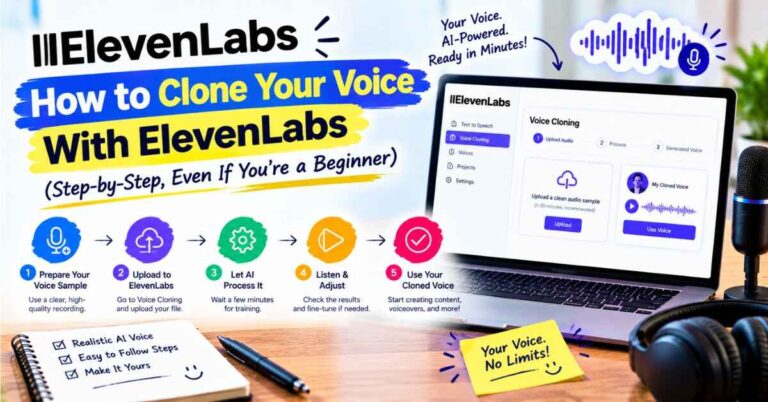
Beyond text to speech, it offers a huge voice library, voice cloning, dubbing into many languages, transcription, sound effects, voice agents, and an API for developers. That’s why people who start with a free test often end up using it for a lot more.
What the Free Plan Is Perfect For
Don’t read the limits and think the free plan is useless. It’s the opposite. Used right, it’s one of the smartest ways to avoid wasting money.
Testing voice quality. Paste in a paragraph from your own writing and listen. If it makes you think “I’d publish that,” you’ve answered the biggest question for zero dollars.
Finding your voice. With a big library of voices, you can audition several and figure out which one fits your brand before you spend anything.
Learning the settings. Stability, expressiveness, and pacing all affect how a voice sounds. The free plan gives you room to play.
Planning your workload. Run a typical script and see how many credits it uses. That tells you exactly what you’d need on a paid plan.
Personal projects. Birthday messages, family videos, practice scripts, and school projects. All fair game.
Use the free plan as your testing lab, then move to a paid plan for the real thing. That’s the smart path.
Where Free Stops and Paid Begins
Eventually, most creators hit one of three walls.
The commercial wall. The moment you want to monetize, you need a paid license. This is the big one.
The volume wall. Ten minutes goes quickly. A couple of videos, a few retakes, and your month is gone. If you publish regularly, you’ll feel this fast.
The feature wall. Things like voice cloning and higher-quality options live on paid tiers.
Here’s the good news. The first paid step is gentle. The entry-level Starter plan is listed at about five dollars a month and is the minimum for monetized content, though some sources list it at six. Prices shift, so confirm on the official page. The point is that moving from “testing” to “publishing” doesn’t require a big commitment.
A couple of other details worth knowing. Paid plans let unused credits roll over for up to two months, which softens the “use it or lose it” feeling. And annual billing saves around 17 percent, which is worth a look once you know you’ll stick with it.
One more thing, because it’s easy to miss. Audio you generate during a paid subscription keeps its commercial rights even after you cancel, but new audio generated on the free plan afterward goes back to the free-plan rules. So if you ever downgrade, remember that what you make from then on is non-commercial again. Check the current terms to be sure. terms
👉 Curious how far the free plan gets you with your own script? Open a free ElevenLabs account and find out in a few minutes.
Real-Life Examples: Free, Starter, or Something Bigger?
Let me make this practical with a few relatable situations.
The curious beginner. He’s not sure AI voices are for him. He signs up, tries three paragraphs, and compares the voices. The free plan is exactly right. He spends nothing, learns what’s possible, and decides in an afternoon.
The new YouTuber. She’s starting a faceless channel and plans to monetize. She tests everything on the free plan, picks her voice, and then upgrades to a low paid tier before publishing anything. That way, her final videos have a proper commercial license from day one.
The weekend blogger. He wants to add audio versions to his best posts. He tests a few on free, loves the result, and upgrades because the audio will live on a site that earns affiliate income. Small cost, clear license.
The course creator. She’s building lessons she plans to sell. She treats the free plan as a rehearsal, tuning her scripts and finding the right voice, then switches to a paid plan to generate the final audio she’ll actually sell.
The student. He needs a voiceover for a school presentation. No money involved, no commercial angle. The free plan is perfect, and he adds the credit where needed.
The small business owner. She wants a phone greeting and a few product videos. That’s commercial, so she goes straight to a paid tier for one month, finishes everything in an evening, and decides later whether to keep it.
Notice the pattern. Free is for exploring, paid is for publishing. Once you see it that way, the decision gets easy.
Why Starting Free Is Smart (Even If You’ll Upgrade)
I’m a big believer in testing before paying, and ElevenLabs makes that easy. Here’s why it’s a good deal.
No risk. You find out whether you like the sound before spending anything.
Real information. You learn how many credits your scripts use, so you pick the right plan instead of guessing.
No regret. Nothing hurts like paying for a tool and realizing the voices don’t fit. Free testing removes that fear.
A smoother start. By the time you upgrade, you already know the interface, so you hit the ground running.
Time saved later. Once you’ve found your voice and settings, your paid plan becomes a straight production line instead of an experiment.
It’s the kind of try-before-you-buy setup that builds trust, and trust is what makes people comfortable enough to upgrade.
Let’s Be Honest About the Downsides
A review that only praises isn’t worth reading, so here’s the other side.
Ten minutes isn’t much. It’s a fine test, but it won’t carry a regular publishing schedule.
The commercial rule can surprise people. It’s clearly stated, but it’s easy to miss if you’re excited and moving fast.
Credits can disappear faster than expected. Retakes burn credits just like first takes. Polishing your script first helps a lot.
Real costs can run higher than the sticker price. One review warns that real production costs can run two to three times higher than plan pricing suggests, mostly from retakes and long projects.
Some words need a nudge. Unusual names and acronyms sometimes need a phonetic spelling or a punctuation tweak.
Details change. Credits, plan names, and rules shift from time to time, and some sites quote slightly different numbers. Always confirm on the official page.
None of these are dealbreakers. They’re just the things I’d want a friend to tell me before I signed up.
A Simple Game Plan
If you want to do this the smart way, here’s the sequence I’d follow.
Step one: sign up for free. It takes a couple of minutes and no card.
Step two: test your own script. Use a real paragraph from your project, not a demo line.
Step three: audition a few voices. Pick the one that sounds like your brand.
Step four: note how many credits you used. That’s your real data.
Step five: decide if the project is commercial. If it earns money, plan to generate the final audio on a paid plan.
Step six: start on the lowest paid tier that fits. Move up only if you hit the limit, and consider annual billing once it’s part of your routine.
That’s it. No overthinking, no wasted money.
Is It Worth Going Beyond Free?
If you create content regularly, I think so, and not because the free plan is bad. It’s because the paid step is small compared to what you get back.
Think about what you’d otherwise do. Record yourself and lose hours to retakes. Or hire a voice actor and pay per project. Or settle for a flat, robotic voice and watch viewers drift away. Compared to those, a low monthly plan for natural-sounding audio and a proper commercial license is a pretty easy trade.
The biggest change for me wasn’t even technical. It was mental. I stopped dreading the voiceover step. When the part of the process that used to drain you becomes the easy part, you finish more projects and you actually publish. That’s where growth comes from.
But don’t take my word for it. Start free, hear it for yourself, and decide when you’re ready.
Quick FAQ
Is ElevenLabs free?
Yes, there’s a free plan with a monthly credit allowance of roughly ten minutes of audio. It’s meant for testing and non-commercial use.
Can I use free audio on a monetized channel?
No. Free-plan output is non-commercial and requires attribution. For monetized projects, you need a paid plan.
Does adding credit make it okay for commercial use?
No. Attribution and commercial permission are separate. Credit doesn’t replace a license.
Do I need a credit card to start?
You can sign up for the free plan without one, though it’s smart to check the sign-up page for current details.
Do unused free credits carry over?
No, they reset each month. Paid plans generally let unused credits roll over for a limited time.
What’s the cheapest plan with commercial rights?
The entry-level Starter plan, listed at roughly five to six dollars a month. Confirm the current price on the official page.
Can I clone my voice on the free plan?
Cloning features are generally reserved for paid tiers. Check the current plan details to confirm what’s included.
Final Thoughts
So, is ElevenLabs free? You can start free, and that’s a gift. It lets you hear the quality, find your voice, and learn how much audio you really need, all without spending a cent.
Just remember the one rule that matters: free is for testing and personal use, and paid is for publishing and earning. Keep that straight, and you’ll avoid the nasty surprise that catches so many beginners.
If you’ve been on the fence, the lowest-risk move is also the simplest. Open a free account, paste in a paragraph you’ve already written, and press play. You’ll know within a minute whether this belongs in your workflow.
👉 Ready to hear how your own words sound? Start with a free ElevenLabs account and see what you think.
Affiliate Disclaimer
Quick heads-up: some links in this post are affiliate links. If you click one and decide to sign up, I may earn a small commission at no extra cost to you. It helps keep this blog running. I only recommend tools I believe are genuinely useful, and my opinions are my own. Plans, prices, and licensing terms change, so please check the official site for current details before you publish or pay for anything.